Start with the deposit, not the equipment label
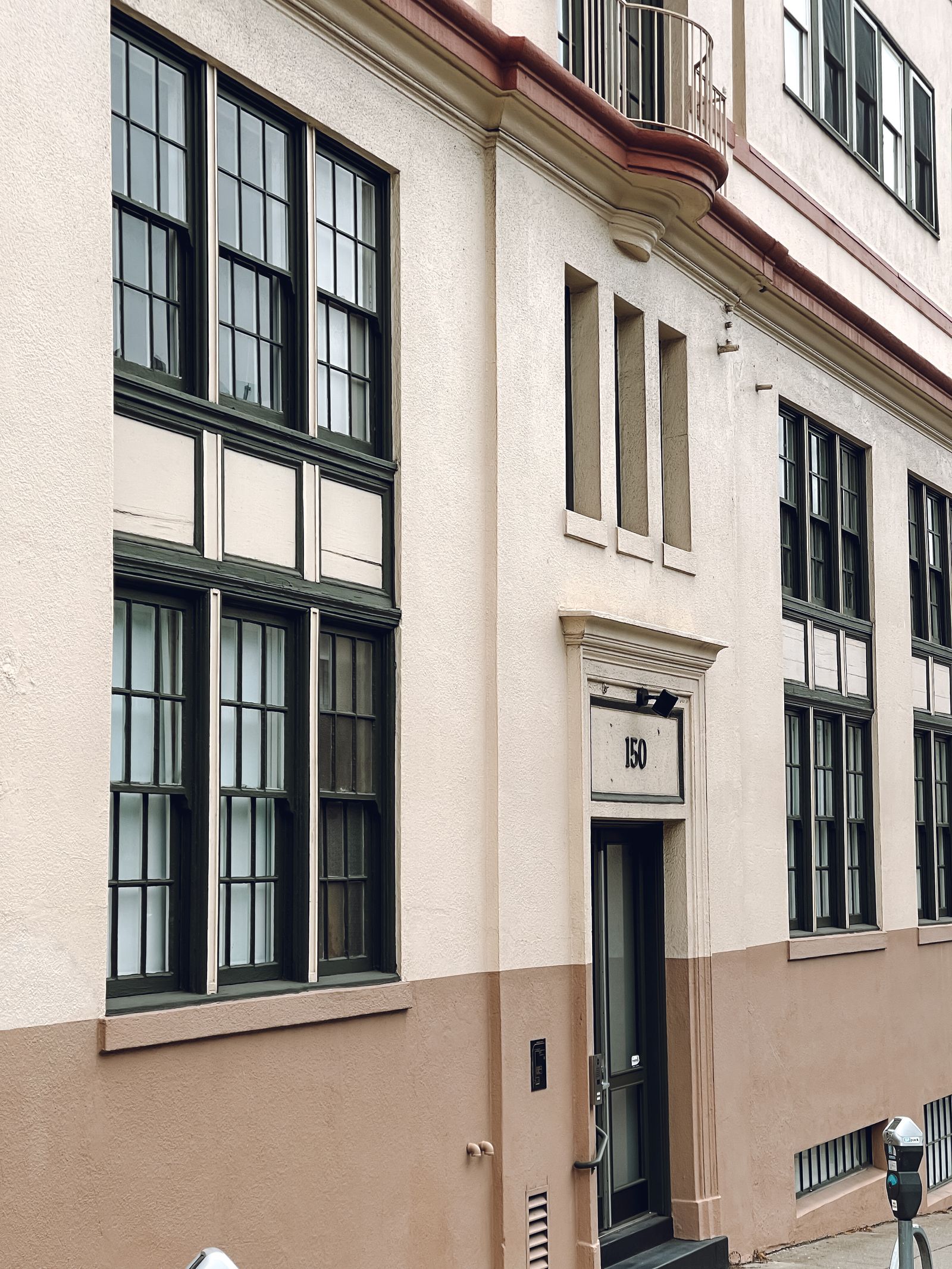
A dark facade may contain algae-like growth, pollen, bird residue, soot, traffic film, loose dust, oxidation, minerals, salt, or a recurring drainage mark. These conditions do not respond identically. Soft washing can be useful when a compatible treatment loosens organic or atmospheric soil and a controlled rinse can remove it without relying on high impact. Pressure can be useful on a tested durable concrete or hardscape zone where the surface, joints, nearby openings, and runoff path support it. More force is not a universal answer for brick, mortar, EIFS, stucco, coatings, sealants, glass, precast, or aged concrete.
In Lafayette, lower walls by parking lots and drive aisles may show winter salt, brine, grit, and splash. Shaded walls may hold organic film longer. White deposits may be mineral residue or efflorescence. Rust-colored streaks may come from metal oxidation or a roof-edge source. A test area and close review can show whether the deposit releases, whether the finish changes, and whether the desired improvement is realistic. If the evidence points to coating failure, active moisture, damaged masonry, embedded soot, hard-water scale, or corrosion, escalating pressure may make the condition worse rather than solve it.
- Classify organic, dusty, traffic, salt, mineral, oxidized, storm-related, and source-related conditions.
- Inspect joints, sealants, coatings, glazing, panels, repairs, and freeze-thaw exposure.
- Use a representative test area when the material history or cleaning response is uncertain.
- Separate washing from glass polishing, restoration, coating removal, and repair.
Compare methods by Lafayette building zone
A downtown Lafayette storefront has pedestrian traffic, curb parking, restaurant activity, deliveries, and public sidewalks close to the facade. Wabash Landing and Levee properties may combine retail, dining, entertainment, shared parking, river-adjacent exposure, and visitor movement. A Purdue-adjacent business can experience student and visitor surges, bicycles, rideshare stops, and seasonal schedule changes without the property being a university facility or having a university contract. Sagamore Parkway retail and medical corridors may require attention to drive aisles, sign pylons, bus stops, patient routes, and multiple entrances. Industrial corridors add truck courts, loading docks, gates, shifts, security, and production constraints.
The comparison should ask what the method does to the operating day. Is the process noisy? How long will an entrance be controlled? Where will hoses cross? What happens to customer, patient, student, employee, or truck movement? How will air intakes, landscaping, signs, doors, and accessible routes be protected? A low-pressure method can still create a slippery walkway or affect a sensitive opening. A higher-pressure method can be reasonable on a tested hardscape zone and damaging on a weak joint or coating. The quote should compare the actual zones rather than choose one technique for the whole address.
Let humidity, storms, salt, and freeze-thaw shape the choice
Lafayette's humidity, shade, summer storms, snow, road salt, and freeze-thaw cycles affect soil and scheduling. Moisture can support organic growth or extend drying. A storm can change wind, dilute treatment, redirect rinse water, and move sediment toward an inlet. Snow and deicing material can collect at ramps, curbs, loading bays, and facade bases. Freeze-thaw conditions can enlarge cracks or expose weak concrete and mortar. Traffic near Sagamore Parkway can add fine road film that behaves differently from a shaded organic deposit.
A defensible method comparison includes temperature, wind, precipitation, lightning, surface moisture, drying expectations, ice, visibility, and the actual forecast. It also includes a stop plan. Work should pause when conditions threaten people, the finish, public separation, aerial stability, plant protection, or water control. A provider should explain what happens if the test area reveals mineral, salt-related, oxidized, embedded, or repair-related conditions. The honest answer may be a different treatment, a limited appearance improvement, or a referral rather than more pressure.
Treat access and aerial support as separate decisions
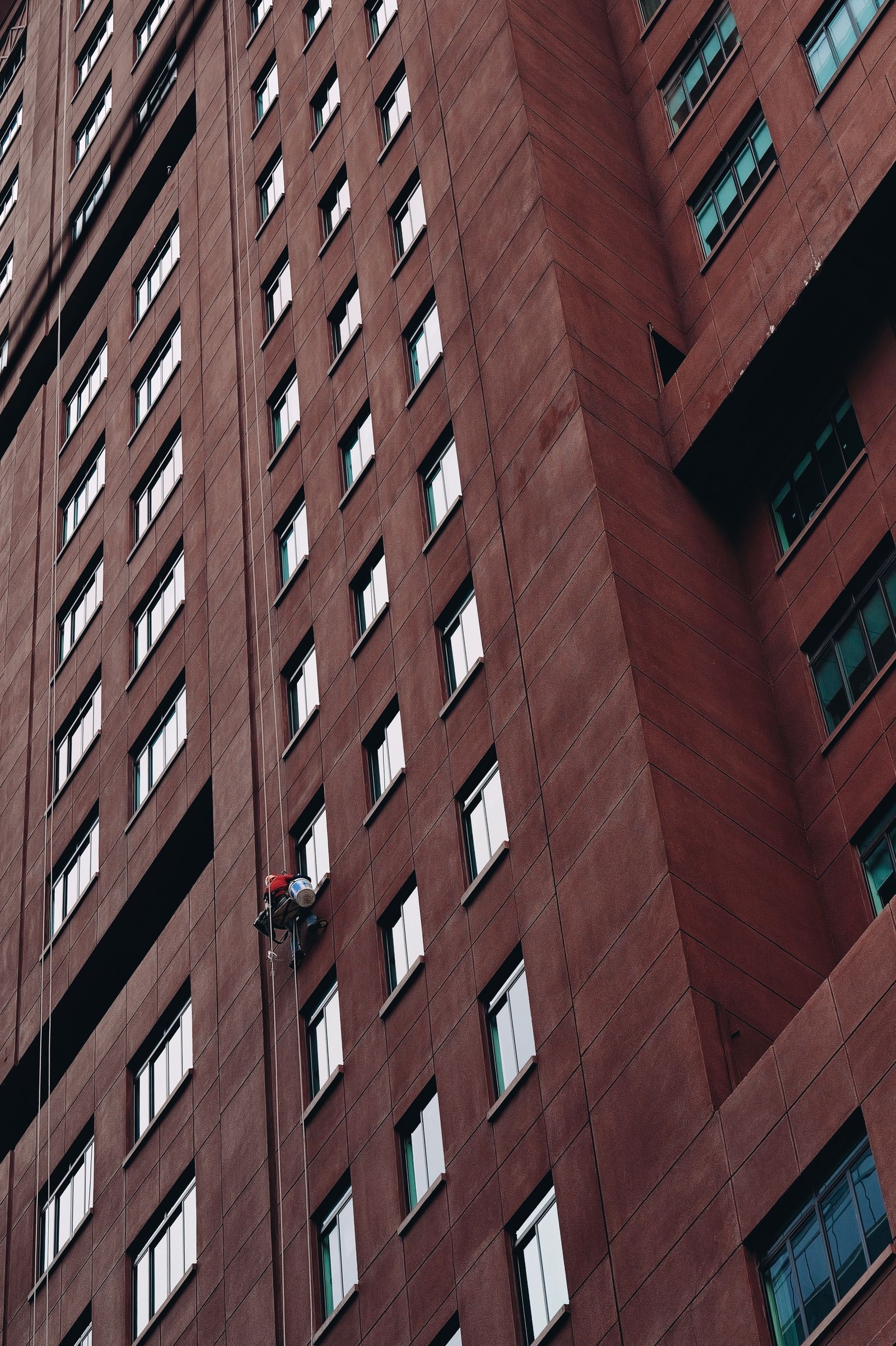
Aerial application or rinsing may support a broad upper wall when there is clear stand-off distance, manageable wind, visual control, a secure launch and recovery area, water access, and a separated ground zone. It does not turn an unsuitable facade into a suitable one. Contact glass, frames, recessed trim, bonded deposits, delicate details, close inspection, brushing, scraping, and repair may still require a pole, lift, roof access, or hand crew. The method should follow the finish and desired result, not the building's height alone.
Lafayette and West Lafayette properties may include overhead wires, trees, rooftop units, balconies, signs, active roads, parking lots, pedestrians, and neighboring tenants. Applicable FAA requirements remain part of commercial operations. Property permission does not replace aviation compliance or solve overspray, people, vehicle, and runoff control. Ask which elevations use aerial assistance, which use ground or contact work, and which conditions would cause the plan to change. A hybrid scope can be more practical than forcing one method across every elevation.
Compare water protection before comparing pressure numbers
The City of Lafayette identifies stormwater quality and drainage as an ongoing public program, and IDEM describes runoff from urban, industrial, institutional, and developed surfaces as a water-quality concern. For a commercial wash, the property team should identify catch basins, curb inlets, low parking areas, landscaped swales, floor drains, sanitary connections, and routes toward neighboring property or the Wabash system. A nearby storm drain is not automatic permission for treated water or sediment to enter it. Product, soil load, rinse volume, slope, and site rules determine the controls.
Depending on the scope and field conditions, controls may include diversion, collection, recovery, reduced rinse volume, filtration, plant protection, disposal, or coordination with the responsible authority. Protection also includes accessible paths, doors, vehicles, cameras, electrical equipment, HVAC intakes, signs, patios, and people. Ask for water-management assumptions, stop conditions, entrance handback, barriers, spotters, test areas, weather triggers, included elevations, exclusions, and closeout photos. Those details let a facilities team compare the full operating plan instead of comparing a pressure number alone.
Use the quote to make the Lafayette choice specific
A Lafayette proposal should identify each material and deposit by zone, the proposed chemistry, pressure and flow controls, test-area process, access equipment, public and property protection, weather limits, runoff assumptions, included elevations, exclusions, and likely finish. It should say when soft washing is preferred, when controlled pressure is appropriate, and when neither method should be sold as a repair or specialty restoration. If the building is near campus-area traffic, downtown events, retail peaks, a medical route, or an industrial shift, the work window should be part of the decision.
Send the address, photos, approximate height, priority elevations, desired result, known materials, operating hours, water access, drainage information, traffic or tenant restrictions, and any history of leaks, repairs, salt, or coating work. Call +1 239-351-2897, email contact@dronebuildingcleaners.com, or use the existing quote/contact CTA to get in touch with Drone Building Cleaners. The next step should make clear which method fits each zone, what improvement is expected, and what another professional may need to address.