Match the wash to Lafayette's facade materials
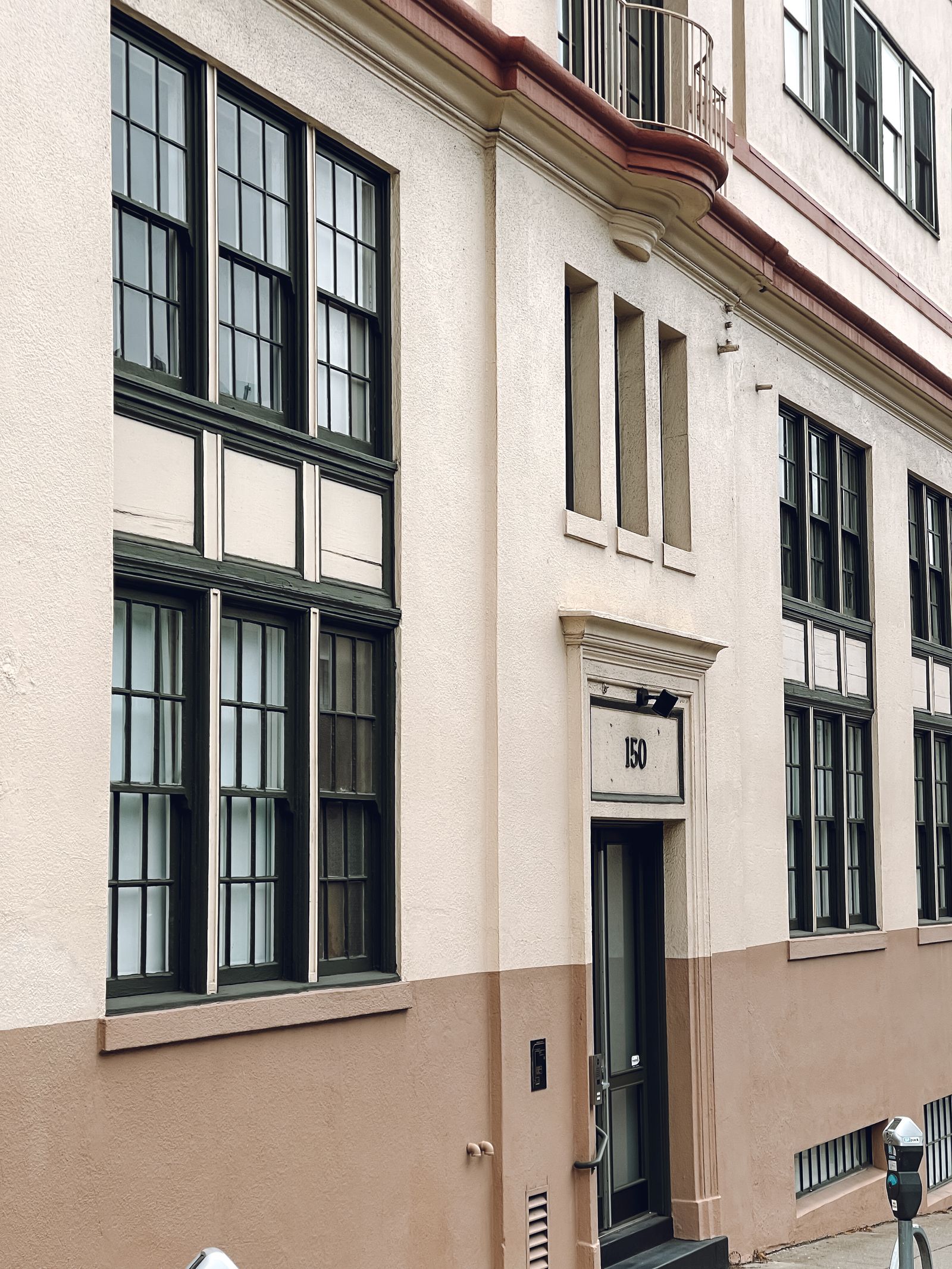
Greater Lafayette commercial properties often combine older downtown brick and mortar with storefront glass, painted metal, concrete, precast panels, EIFS, stucco, stone accents, signs, and later repairs. A facade beside the Wabash River or a shaded north wall may hold moisture longer than a sun-facing elevation. A retail center may have broad hardscape, signs, canopies, and customer routes. A medical or office property may put air intakes, patient drop-off, accessible entries, and quiet zones near the wall. An industrial building can add loading docks, truck lanes, overhead utilities, security gates, and exposed metal siding. One pressure setting or chemistry should not be assumed across all of those zones.
Soft washing can be a fit for compatible algae, mildew-like growth, pollen, bird residue, and atmospheric film when the substrate and coating can support the proposed chemistry and rinse. It is not a substitute for repairing failed mortar, spalled concrete, cracked panels, leaking gutters, failed sealants, loose coatings, or water intrusion. White crust may be mineral residue or efflorescence; orange streaks may be oxidation; a dark line may be a drainage path or embedded traffic soil. We use a representative test area when the finish history or deposit is uncertain and state what improvement is realistic after drying. Cleaning, restoration, glass polishing, coating work, and repair should remain separate scope decisions.
- Separate brick, mortar, concrete, glass, metal, EIFS, stucco, painted, and coated zones.
- Identify organic film, salt, minerals, oxidation, soot, traffic soil, and source-related staining.
- Define whether the priority is a customer-facing reset, phased maintenance, or recurring care.
- Keep active leaks, failed joints, coating failure, and facade repair outside a routine wash promise.
Plan around downtown, Sagamore Parkway, and retail activity
Downtown Lafayette can place storefronts, restaurants, offices, apartments, hotels, events, curb parking, deliveries, and public sidewalks close together. Wabash Landing and the Levee area add retail, dining, entertainment, river-adjacent conditions, pedestrian crossings, and shared parking. A property in the Purdue-adjacent West Lafayette and Chauncey Village context may see heavier student, bicycle, rideshare, and visitor movement at particular times of day and academic year. None of that should be treated as a reason to claim a Purdue relationship; it is simply an operating condition to plan around. Along Sagamore Parkway and other retail or medical corridors, vehicle queues, bus stops, sign pylons, drive aisles, and multiple tenants can make a hose route or wet walkway disruptive.
Before setup, identify the public entrance, accessible path, delivery window, tenant notices, parking restrictions, outdoor seating, employee entrance, emergency route, air intake, security requirement, and person authorized to pause work. A facade can be divided into zones so one entrance remains available while another is controlled. A retailer may need work before opening. A clinic may need a patient route and drop-off kept clear. An industrial site may need a window between shifts or trailer movements. A good scope protects the building's daily function as carefully as the finish.
Account for humidity, storms, snow, salt, and freeze-thaw
Lafayette's seasonal cycle changes both the appearance of a facade and the conditions in which it can be cleaned. Humidity, shade, tree cover, and irrigation can support organic film or slow drying. Thunderstorms can change wind, visibility, runoff direction, and access in a short period. Snow and deicing salt can collect at parking entrances, curbs, garage ramps, loading docks, and lower walls. Freeze-thaw movement can expose cracked joints, spalled concrete, loose brick, and water paths that should be documented rather than hidden. Road film near Sagamore Parkway and other busy corridors may combine dust, soot, salt, and splash with organic residue.
We review the forecast, wind, rain, lightning, temperature, surface moisture, drying time, and actual ground conditions before each phase. Rain can dilute an application and redirect rinse water toward a low point. Wind can carry droplets toward vehicles, landscaping, sidewalks, or neighboring tenants and can make aerial assistance unsuitable. Freezing conditions, ice, or an unstable work zone may require a pause. If the mark is mineral, oxidized, salt-related, embedded, or caused by a gutter or envelope condition, more pressure is not automatically the answer. The proposal should identify expected improvement and limitations before work begins.
- Review wind, rain, temperature, lightning, ice, surface moisture, and drying before mobilization.
- Distinguish winter salt and brine from algae, pollen, soot, minerals, oxidation, and drainage staining.
- Inspect roof edges, downspouts, joints, and low walls for recurring water sources.
- Set weather pause, reschedule, and entrance-handback triggers in the work plan.
Use aerial support only where the Lafayette site supports it
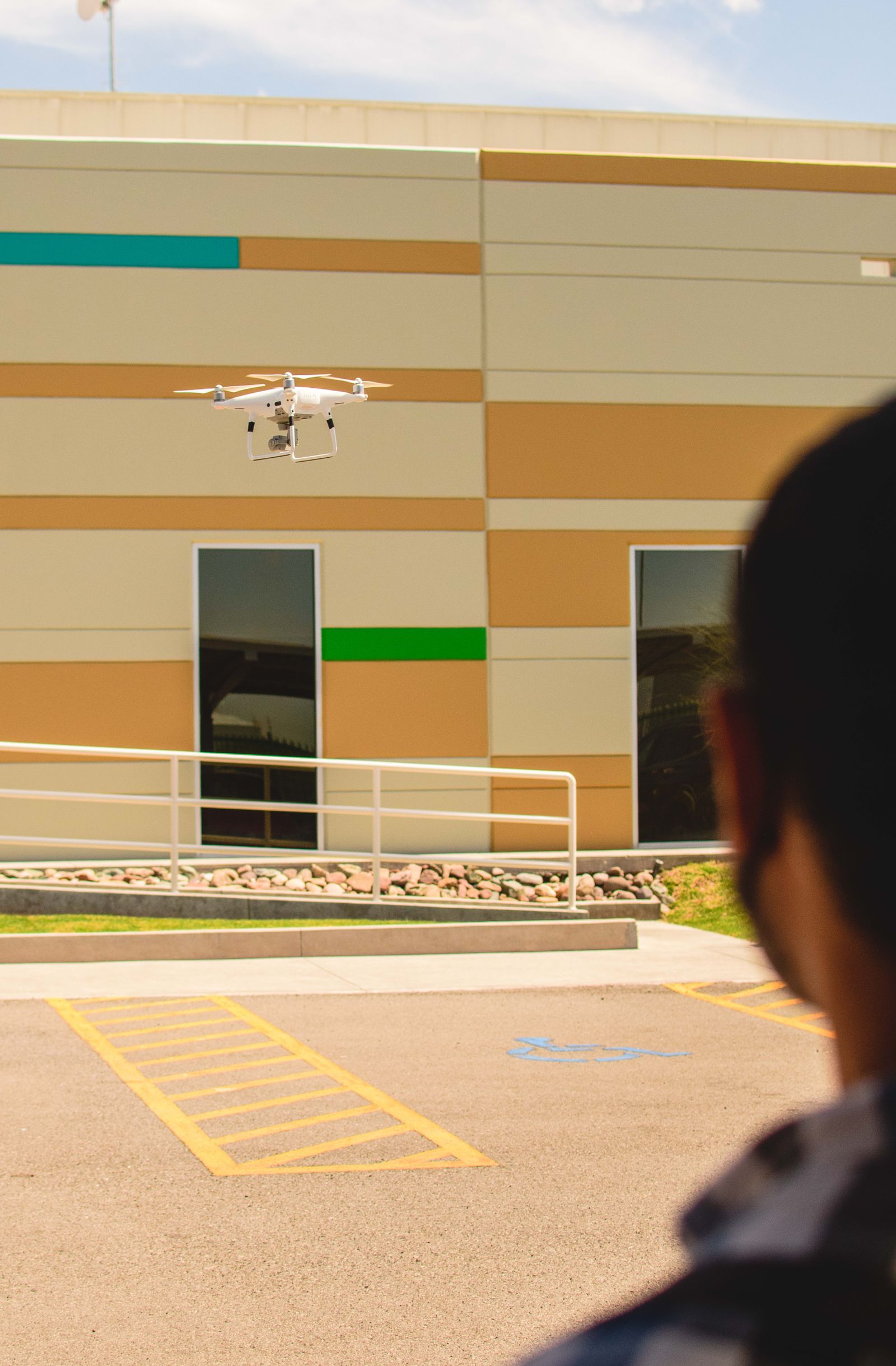
Drone-assisted application or rinsing may support a broad upper elevation when there is suitable stand-off distance, a secure launch and recovery area, visual control, manageable wind, water access, public separation, and a coordinated ground team. It may reduce some lift repositioning on compatible upper walls, parapets, ledges, or sign bands. It does not squeegee contact glass, scrape bonded deposits, polish mineral marks, brush recessed details, inspect concealed conditions, repair joints, or make incompatible chemistry appropriate. A proposal should name the exact elevations and tasks where aerial assistance is proposed and identify the areas that still need a pole, lift, roof, ground, or hand-access method.
Lafayette and West Lafayette sites may include trees, wires, rooftop equipment, balconies, signs, active roads, parking structures, neighboring buildings, and people moving between businesses. Commercial drone operations must follow applicable Federal Aviation Administration requirements; property permission does not replace aviation rules. The launch area, aircraft separation, overspray controls, ground zone, and runoff plan all matter at the actual address and time. If those conditions cannot be controlled, another method or a different work window is the better decision.
Protect people, landscaping, equipment, and runoff paths
Map doors, accessible routes, parking aisles, loading docks, air intakes, cameras, electrical equipment, landscaped beds, vehicles, neighboring walls, storm inlets, and low points before applying water or chemistry. Downtown pavement, shared retail lots, medical drop-offs, industrial yards, and river-adjacent sites can move water farther than expected. Hoses need planned crossings and protection. Barriers, spotters, signage, plant protection, entrance handback, and a property contact who can stop the work should be part of the setup, not an afterthought.
The City of Lafayette describes stormwater as a regulated program and notes that runoff from impervious surfaces can carry pollutants toward the drainage system. IDEM likewise treats runoff from urban, industrial, institutional, and other developed areas as a water-quality concern. A storm drain below a wall is not automatic permission to send treated water into it. Product, soil load, rinse volume, slope, inlets, sanitary connections, and site rules determine the responsible controls. Depending on the property, that may mean diversion, collection, recovery, reduced rinse volume, filtration, plant protection, disposal, or coordination with the responsible authority. The quote should state the runoff assumptions and the response if field flow differs from the initial review.
Request a Lafayette quote tied to the building
A useful proposal should identify service zones, materials, visible soil, intended result, proposed method, access, weather limits, water assumptions, public protection, included features, exclusions, and closeout documentation. It should separate facade washing from detailed glass work, hard-water removal, salt or mineral treatment, construction residue, graffiti treatment, coating work, masonry repair, and envelope investigation. If aerial assistance is included, the proposal should state the site conditions that must be present and where another access method is required.
Send the address, wide and close photos, approximate height, priority elevations, known materials, preferred timing, water access, drainage details, tenant or patient constraints, delivery schedule, and any history of leaks or repairs. Those details help determine whether a remote review, site visit, test area, or phased plan should come next. We can discuss a one-time appearance improvement, a customer-facing elevation, or recurring maintenance around the way your Lafayette property operates.
Drone Building Cleaners can help Lafayette property managers, owners, facility teams, retailers, offices, hotels, medical properties, industrial sites, warehouses, mixed-use buildings, and campus-area businesses clarify the next step. Call +1 239-351-2897, email contact@dronebuildingcleaners.com, or use the existing quote/contact CTA. We will explain what can be cleaned, which method fits each zone, what may remain, and which conditions belong to another professional.